Your Complete Guide to Endurance Tack
- Lily

- May 26, 2025
- 5 min read
Updated: Jun 22, 2025
When I began dipping my toes into endurance, one of the first questions I had was what kind of gear I needed. Here’s a quick guide to that tack that will help you and your horse excel on long distance rides.

Why does endurance tack look so… different?
With the funky looking saddles and brightly colored plastic bridles, endurance tack is far from traditional, but everything riders use is built for function and comfort. Unlike most other competitive equine disciplines, endurance riders compete in a huge variety of different tack setups. Personal preference learned through trial and error is the only way to find your perfect endurance tack kit. These are the most important principles to keep in mind when you’re choosing tack:
Comfort:
This goes for horse and human! Riding upwards of 50 miles, there’s no room for error. A poorly fitting saddle will lead to a back sore horse, and likewise, a rider must be comfortable and balanced in order to ride to the best of their abilities and guide their horse down the trail. Make sure to test your gear thoroughly before heading to a ride!
Weight:
Anyone who has gone backpacking knows the difference added weight can make to the difficulty of a day on trail. Opting for a lightweight, streamlined saddle can make your horse’s job a lot easier. Additionally, you’ll be spending a lot of time toting your tack back and forth at vet checks so a saddle that’s easy to carry will make your day better too!
Durability:
Colorful beta-biothane tack might make riders in other disciplines shake their heads, but the durability of this plastic tack makes a world of difference in a sport where our horses are sweating a lot, riding in the elements, and are being splattered by mud and scraping up against tree branches. Not only is biothane tack completely water resistant, it doesn’t need maintenance like leather and can even go through a dishwasher!
Saddles:
Arguably the most important part of any tack kit, riders have a huge selection when it comes to saddles, from endurance-specific styles, to western saddles with horns, to simple dressage saddles.
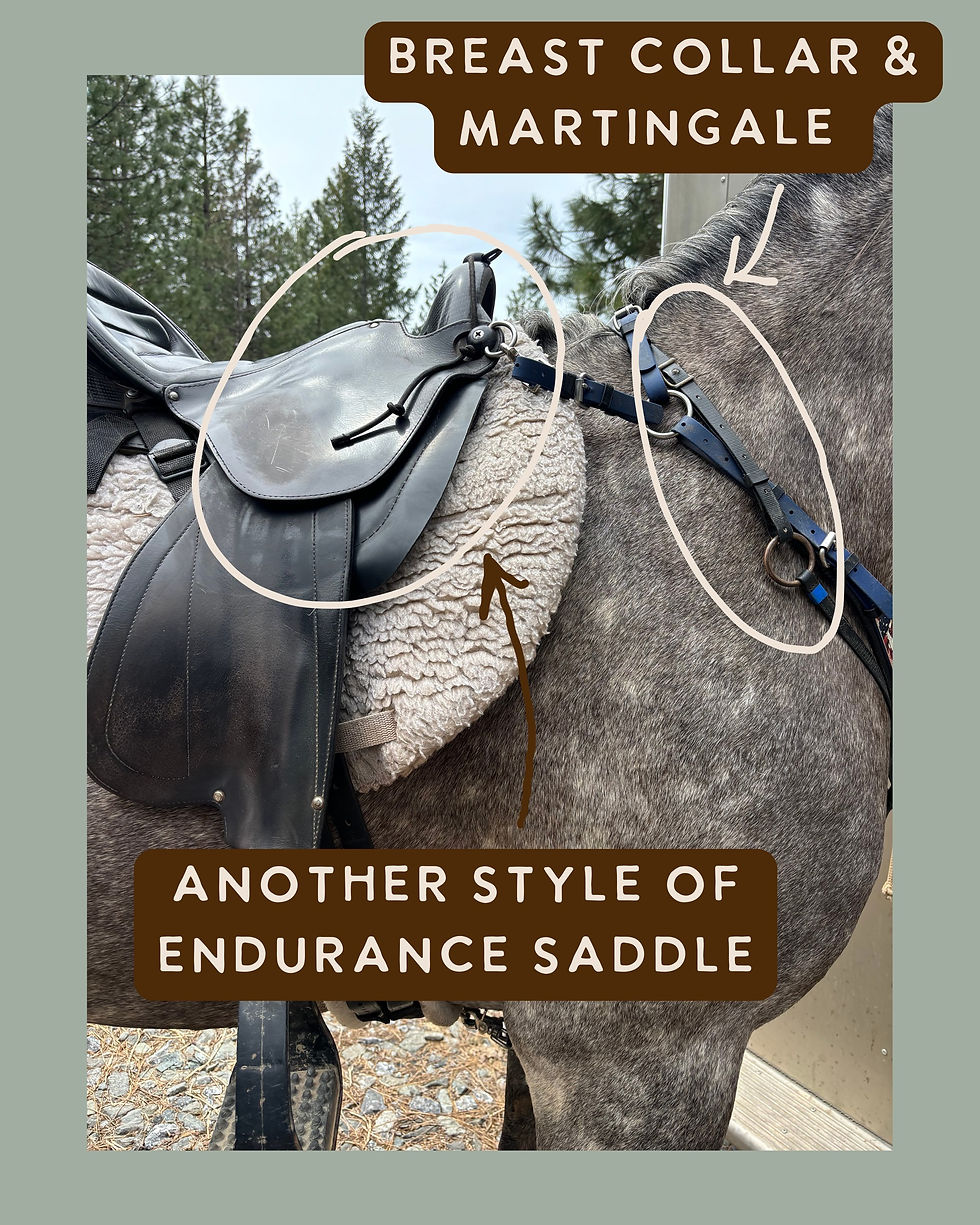
I personally ride in an ultralight adjustable saddle made by Specialized. I added bucking rolls for added stability and fleece covers over my stirrup leathers to help with chafing on my shins.
While some riders have success with treeless saddles, saddles with trees are generally more popular and provide even weight dispersal across a horse’s back.
Besides fit and weight, another thing to look out for when you’re picking a saddle is attachment points and dee rings to secure saddlebags and sponges to.

Saddle pads:
I’m beginning to sound like a broken record, but there are countless options when it comes to saddle pads. Your choice should be made based on what works best for your horse rather than looks.
Many “endurance cut” saddle pads are shaped for endurance style saddles, with minimal extra material to get in the way. Keeping your horse’s back as cool as possible is key. I have personally found success with my Supracor honeycomb cell foam pad which is very well ventilated and is approved by my sensitive-skinned mare. Wool fleece pads are a very popular choice, but make sure you find one that is high quality, as synthetic fleece has a propensity to compress and contribute to fit issues.
Girths:
Just like saddle pads, an endurance girth should be comfortable and should ideally be ventilated or moisture wicking to help keep sweaty horses comfortable. Many endurance saddles have long billet straps, so you will need a dressage-style girth with two buckles. I love using mohair which is naturally antimicrobial, sweat wicking, and stretches slightly as my horse moves. Fleece is again a popular option. Be cautious with neoprene and leather girths that can trap a lot of heat.

Stirrups:
An underlooked but important part of your tack kit, I like wide tread stirrups for long distance riding. They provide relief to my ankles and knees when I’m posting the trot for hours on end and accommodate hiking boots with a wide toe box. Caged stirrups are also popular for riders who wear trail running shoes without a heel, but I personally find them very uncomfortable to ride in. Once again, test your options before going out all day!
Breast collars:
Even with a well fit saddle, most endurance horses working in steep country wear breast collars to prevent their saddles from slipping back. Mine is made from beta biothane and padded to prevent rubs, with clips to make it easy to take on and off. At rides you will need to pull your horse’s tack quickly to cool them at vet checks, so wrestling with buckles is something I try to avoid.
Another tool you might see being used is a crupper, which goes under a horse’s tail and connects to the back of the saddle to prevent it from slipping forward, which can be a struggle for horses with certain conformation characteristics.

Hoof protection and boots:
Most endurance rides will require some form of hoof protection for your horse. The choice between metal or composite shoes and hoof boots is up to the individual. Even if your horse is shod, it’s a wise idea to carry a backup hoof boot in case your horse loses a shoe mid-ride.
I don’t use interference boots on my personal horse, only bell boots as her downhill build leads to occasional overreaching. Brushing boots are common for horses who do interfere to prevent cuts to the fetlocks, or for rides in rocky or brushy country. Keep in mind that any sort of leg wrap or tendon boot traps a lot of heat on the soft tissue of your horses’ legs, so if you boot your horse, look for minimal, well-ventilated options that won’t pick up burrs or foxtails as you ride.

Bridles & reins:
Combination halter-bridles are a staple piece of endurance tack. There’s many options available, both bitted and bit-less.The ability to seamlessly transition from bridle to halter is extremely handy at rides, such as when you need to lead your horse on trail, tie them up, or present your horse to the vet.
Beta biothane is once again a popular choice for material. I have used “snap-on” style where the piece with the bit or hackamore snaps onto the halter at the brownband. My favorite endurance bridle has clips on the cheek pieces which makes it easy to take the bit out of my horse’s mouth.
My reins have scissor clips so they can become a lead line.


Where should I get my endurance tack?
As I mentioned, there are SO MANY options out there! Buying used is always a good way to go while you’re learning what kinds of tack you like, but be cautious of condition, especially for saddle pads or any type of foam inserts which can easily become compressed to the shape of the previous owner’s horse.
There’s also many small businesses making custom biothane tack online, so you can choose your signature colors.
Feel free to share this guide with other newbies if you found it helpful & happy trails!

